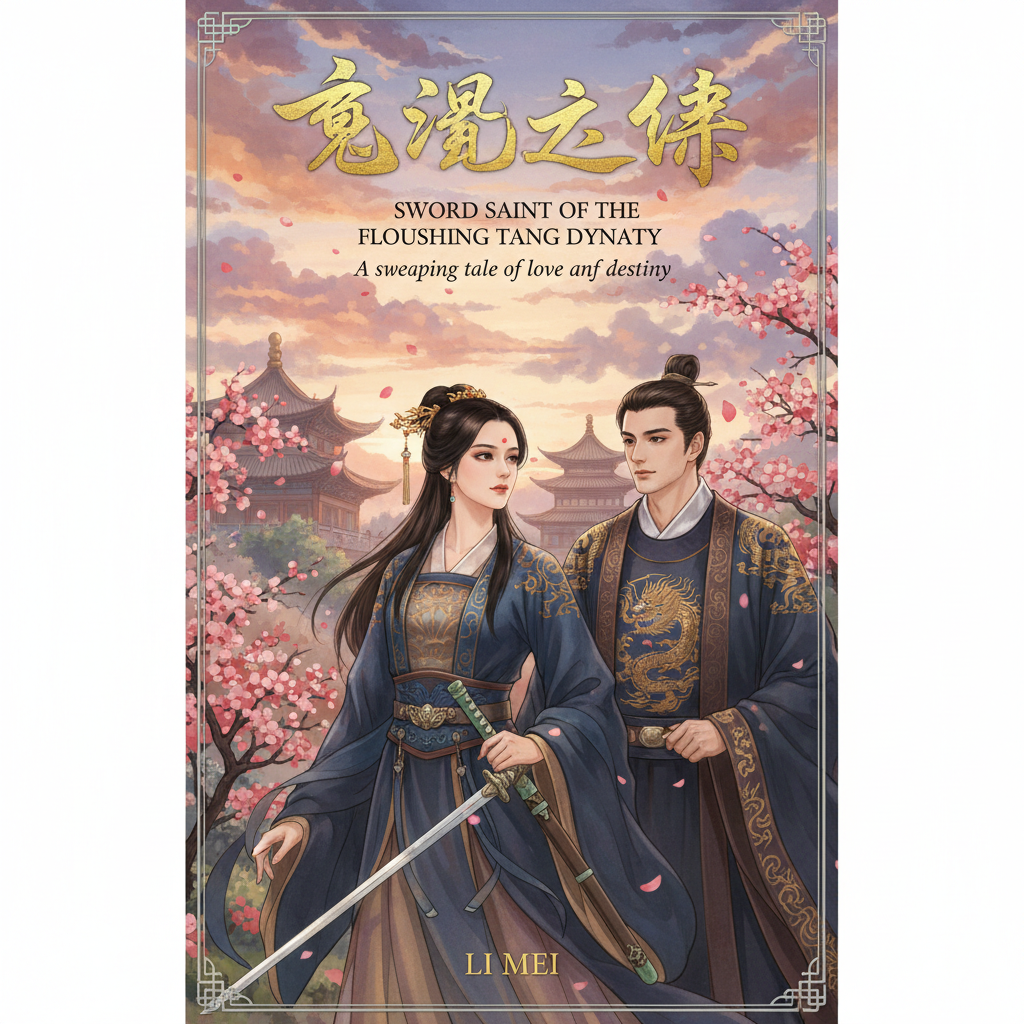
Sword Saint of the Flourishing Tang Dynasty
The Three Wonders of the Flourishing Tang: the poetry of Li Bai, the cursive calligraphy of Zhang Xu, and the swordsmanship of Pei Min. A student of Chinese literature finds himself transported into t
The north wind howled as night fell, casting the land of Yan and Yun into utter silence. High above, crows cawed with a mournful sharpness, their calls almost cheerful in the bleak night.
Li Dapu, chieftain of the Xi tribe, sat proudly astride his horse, whip in hand, his spirits high as he pointed to the flocks of crows wheeling across the sky. Laughing, he declared, “We feast, and even the black birds follow to share in our fortune! What do they say—when one man prospers, even his dogs and pigs benefit… I don’t believe in those so-called gods and spirits. In plain terms, when I grow wealthy, the whole tribe rejoices. Stand with me, Li Dapu, and even if you’re not of my blood, you’ll be like these crows—meat to eat and women to enjoy.”
He was speaking to Lai Wu at his side.
Li Dapu, chief of the Xi tribe, was not a man of letters, and his tribe’s power was not especially great. Yet he was renowned for his valor in battle and a fox-like cunning. In these war-torn northern lands, he played Turkic and Tang powers off each other, adapting with the winds, thriving like grass by a wall—falling whichever way the wind blew, yet living with ease.
Not long before, the newly appointed Governor of Youzhou, Sun Quan, had overreached himself, ignoring the treacherous roads and summer heat. He rashly advanced with a lone force, hoping to annihilate the Xi. Li Dapu seized this opportunity, and with only eight thousand horsemen routed the Tang army, which outnumbered them several times over. Sun Quan and his general Zhou Yiti both fell into Li Dapu’s hands.